Vea
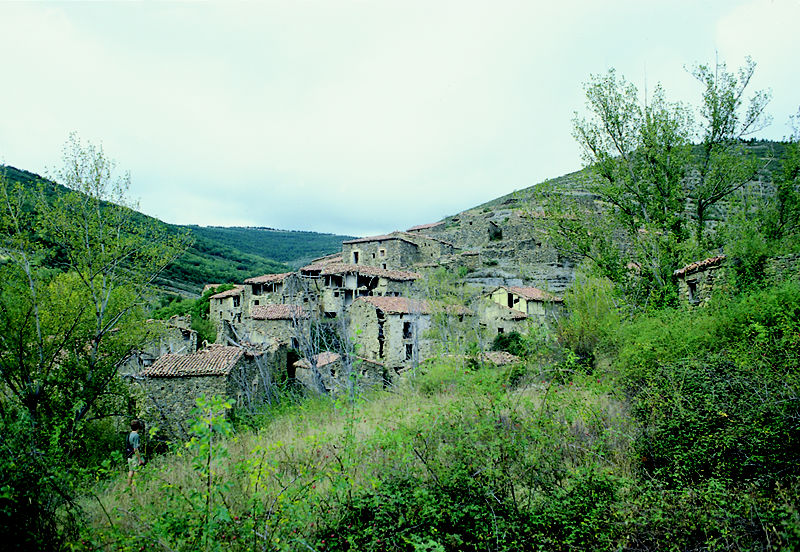
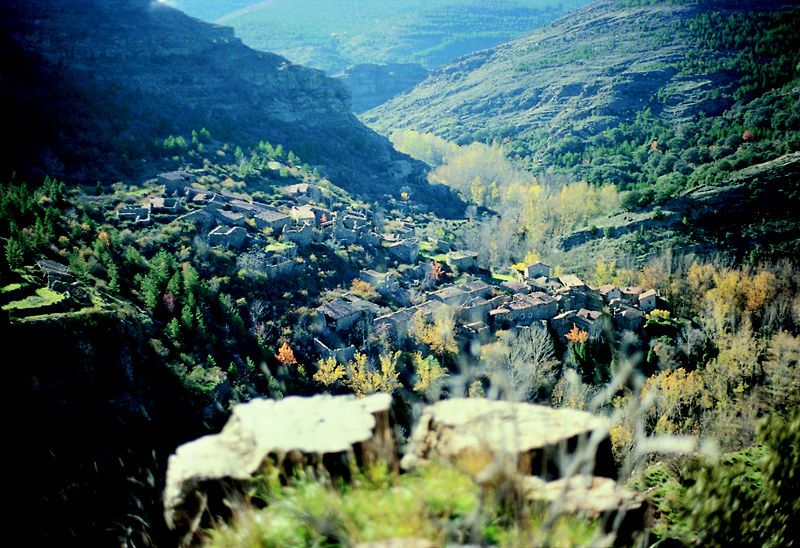
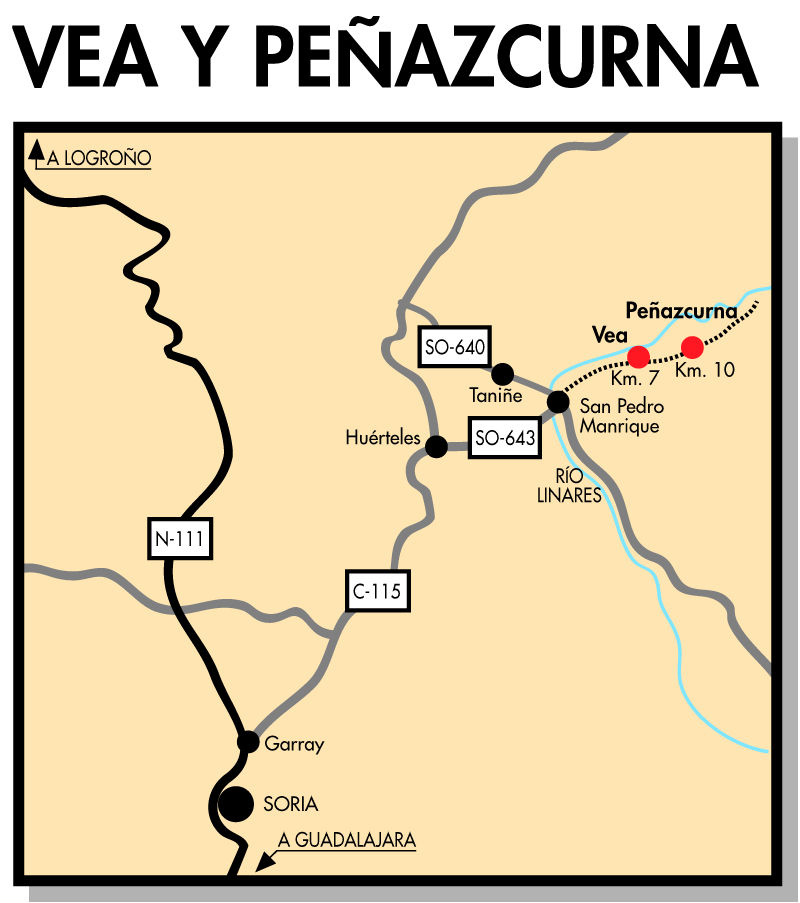
Vea is an abandoned village in the mountains of Soria, Spain, above the Linares river near San Pedro Manrique. When it was documented for this archive around 2000, it could only be reached on foot along a seven-kilometre path, and it kept the ruins of about thirty houses, its school, a mill and a castle.
The village in 2000
Hidden in the Castilian countryside and forgotten in the archives lies Vea: a village that, in its last act before dying, buried itself in the undergrowth and cut the paths that tied it to the rest of the world. For a seasoned explorer, visiting Vea is a hard day’s work. No road, bridle path or forest track leads there. You have to walk. No bicycle, motorbike or horse will make the journey willingly. The seven-kilometre path climbs and drops a hundred metres as it winds along sheer rocky slopes above the Linares river. It is choked with brambles, rockrose and fallen branches of every kind. And to top it off, as if the trip were an obstacle course, it is barely signposted.
Locals say that once a traveller reaches Vea, they will struggle to leave. This is not to be taken lightly: entering Vea and exploring its many streets and buildings is an invitation to an uncomfortable journey. You can walk into a house, go through it, come out on another street, enter another house, and only then realise there is no way out: the gap is sealed by a mesh of brambles so dense that even light struggles to pass. Trying to push through would be like diving headfirst into a pool full of drawing pins.
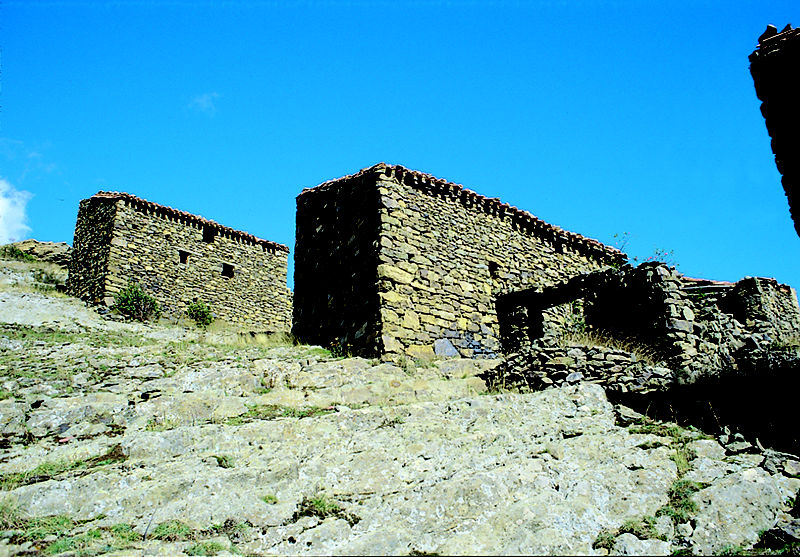
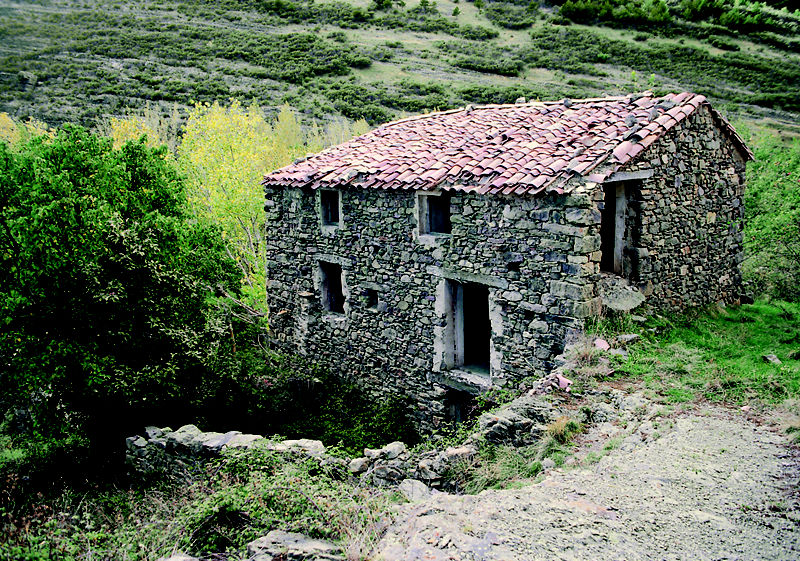
In return for just a few scratches, Vea offers its threshing floors, where the threshing sledge was used on the wheat; nothing grows there now but a soft layer of grass. There are ruins of about thirty houses, many of them in excellent condition. Some have curved walls that look as if they were built yesterday, and some are three storeys high, built straight onto the hillside the village stands on. Above the small town hall there is a schoolroom and, next to it, the teacher’s house. Below the village lie the vegetable plots, where poplars grow today.
Though well hidden, Vea’s water system is worth discovering. Water was dammed upstream and carried along a stone channel that ran beside the main path into the village. When it reached Vea, its force drove the flour mill. With no well, the mill was the only source of water, and villagers came to it to fill their pitchers. From there the water went on to irrigate the plots below the village.
Not everything Vea has to offer lies within the village. Across the Linares river from the plots stands a wash house in perfect condition. Above it, hidden in a cloud of brambles, is the cemetery. The brambles are two metres thick, which makes entering the cemetery a privilege reserved for those with the right equipment: a machete, gloves and several layers of clothing.
The ruins of Vea’s castle stand on the mountain opposite, about 200 metres up. Only a truly keen explorer should attempt it, as there is no marked path. You have to cross the riverside vegetation, then the river itself, and then climb terraces covered in brambles that end at the castle. Little remains but some walls and the remains of an embrasure, but the real prize is the view of the valley and the neighbouring villages.
Vea also has an extra attraction few villages can offer: a hamlet of its own. Peñazcurna lies three kilometres from Vea, reached by a path that follows the river and then climbs up to it. This small settlement of four streets and a church is hemmed in by vegetation on both sides: by a line of pines above and an impenetrable hedge of brambles below.
From the archives
After much digging, we found traces of everyday life in Vea that give an idea of what it was like when it was inhabited:
- In 1867, 4,300 kilos of potatoes were harvested.
- In 1904 there were 8 mules, 16 donkeys, 224 sheep, 62 goats and 10 horses.
- In June 1932, 87 hectares of wheat, 26 of barley and 14 of rye were harvested.
- On 3 March 1939, villager Tomás H. L. was fined for travelling without a safe-conduct pass.
- On 7 April 1959, a linear metre of Uralita (asbestos-cement) pipe cost 37.35 pesetas.
English translation of the Spanish original (2000).
Gallery
How to cite this page
Are you or a relative named on this page and would prefer the name removed? Write to us and we will do it.